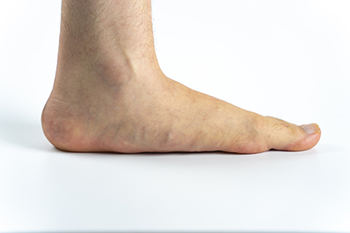
There are many people that are born with [flat feet](https://kidshealth.org/en/parents/flat-feet.html). This condition can be identified by standing on the floor and noting if the entire foot lies flat. Additionally, flat feet may be part of a genetic disorder, and there may be pain in the feet and ankles that are associated with it. Research has shown there are two types of flat feet. Rigid flat feet indicate the arch is completely missing, and flexible flat feet show the arch is present when the patient sits or stands. People who have pain that is related to flat feet may find mild relief when custom made orthotics are worn, in addition to wearing sturdy shoes. If there is pain from this condition, it may be associated with tight tendons or bone problems. If you have flat feet, it is suggested that you schedule a visit with a podiatrist who can properly assess this condition.
Flatfoot is a condition many people suffer from. If you have flat feet, contact [one of our podiatrists](https://www.mcallenfootcenter.com/meet-our-doctors.html) from [Foot Center](https://www.mcallenfootcenter.com/). Our doctors will treat your foot and ankle needs.
What Are Flat Feet?
Flatfoot is a condition in which the arch of the foot is depressed and the sole of the foot is almost completely in contact with the ground. About 20-30% of the population generally has flat feet because their arches never formed during growth.
Conditions & Problems:
Having flat feet makes it difficult to run or walk because of the stress placed on the ankles.
Alignment – The general alignment of your legs can be disrupted, because the ankles move inward which can cause major discomfort.
Knees – If you have complications with your knees, flat feet can be a contributor to arthritis in that area.
Pain around the heel or arch area
Trouble standing on the tip toe
Swelling around the inside of the ankle
Flat look to one or both feet
Having your shoes feel uneven when worn
If you are experiencing pain and stress on the foot you may weaken the posterior tibial tendon, which runs around the inside of the ankle.
If you have any questions please feel free to contact our offices located in [McAllen,](https://www.mcallenfootcenter.com/locations/mcallen-office.html) [and Weslaco, TX](https://www.mcallenfootcenter.com/locations/weslaco-office.html). We offer the newest diagnostic and treatment technologies for all your foot and ankle needs.